

Written by: Brittni Winslow, MS, OTR/L
Sunday evening in our house looks like controlled chaos. My middle schooler and I sit at the kitchen table, her Order Out of Chaos planner open between us, while my 6-year-old builds a fort nearby. We’re planning the week ahead, and it’s not just about homework—it’s about making space for three different sports schedules, time for fun, regulation breaks, and yes, eventually, math homework.
This is what ADHD parenting looks like in real life. Not perfectly color-coded systems or Instagram-worthy command centers, but real strategies that help real kids navigate their days with success and (mostly) less stress.
I have two daughters with ADHD, and supporting them looks completely different. My middle schooler is busy, passionate, and driven—juggling multiple sports and activities she genuinely loves. My first grader is still building her executive functioning foundation, one visual schedule and timer at a time. What they have in common is that they both need external structures to support their internal worlds.
And honestly? So do I. Because when you’re parenting kids with ADHD, you quickly realize that the strategies that help them succeed help the whole family function better.
My middle schooler is the kid who wants to do everything—and often can, with the right supports in place. But here’s the challenge: with three different sports, a social life, and getting used to middle school, her afternoons are packed. The ideal time for homework would be right after school, when her brain is still in “school mode.” But that’s exactly when she has practice.
So instead, we’ve had to get creative about setting her up for success later in the evening.
This is where the Order Out of Chaos planner has become essential. Every Sunday, we sit down together and map out the week. We start with what we know for certain: all those after-school activities that fill her schedule. Then we work backward, identifying pockets of time where homework and studying can realistically happen.
The planner’s layout makes this visual and concrete. We’re not just making a to-do list; we’re time-blocking her entire week. When will she study for that science test? When does the English essay need to be drafted? When can she actually pack her soccer bag without it being a 10 p.m. panic?
This isn’t about being rigid—it’s about being intentional. And critically, it’s about preventing the “I’ll do it later” trap that ADHD brains fall into so easily.
Even with perfect planning, there’s a reality we can’t schedule away. By evening, my daughter’s regulation tank is running on empty. She’s been “on” all day at school, pushed her body at practice, and navigated social dynamics. Her brain needs a reset before it can tackle math problems.
We’ve learned to build in sensory and environmental regulation strategies before homework time:
The goal isn’t to eliminate the challenge of evening homework—it’s to get her into that “just right” place where her brain can actually engage with the work.
We’ve also implemented what I call “task chunking”. Instead of “pack your lunch before bed,” which somehow never happens, we’ve decided: lunch gets packed right after dinner, while we are still cleaning the kitchen. Soccer jersey? Located during our Sunday planning session and held in a basket in her room ready for game day. These aren’t my ideas imposed on her but they’re agreements we’ve made together. Having a sense of ownership makes her more empowered and helps to build her ability to become more independent with executive function tasks moving forward.
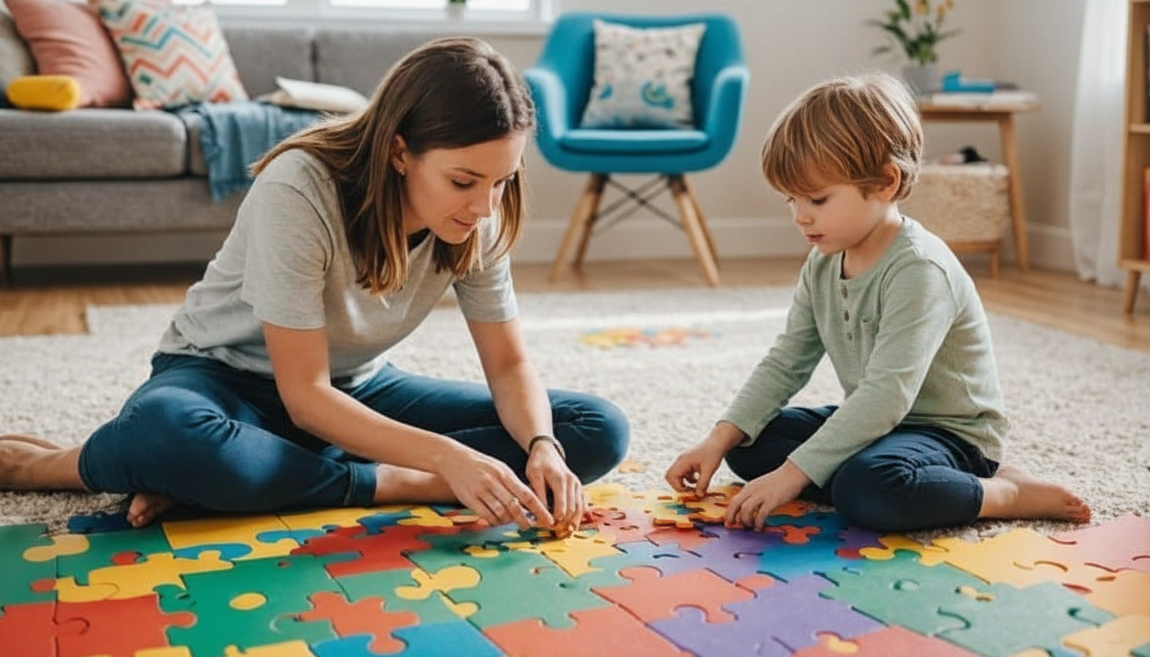
My 6-year-old is at a completely different stage. She’s not planning her week, but rather she’s learning to transition from one activity to the next. She’s not managing homework, but rather she’s learning to clean up her toys. However, the executive functioning skills she’s building now are the foundation for everything that comes later.
For her, visual supports are everything. We have picture schedules for morning and bedtime routines, and they live at her eye level. She needs to be able to see what comes next without asking me. Even with visual supports, she needs me physically present for most tasks. This is body doubling in its purest form. I don’t do the task for her, but my presence provides the external accountability and focus her brain hasn’t yet developed internally. I fold laundry nearby while she picks out her clothes. I read my book sitting on her bed while she finds something for “show and share.” My proximity is the scaffold she needs.
The instruction “clean the playroom” means nothing to her ADHD brain—it’s too big, too vague, too overwhelming. So we make it specific and engaging:
“Your job is to pick up all the dress-up clothes. What song do you want to listen to while you do it?”
One task. One category. One song. That’s what works.
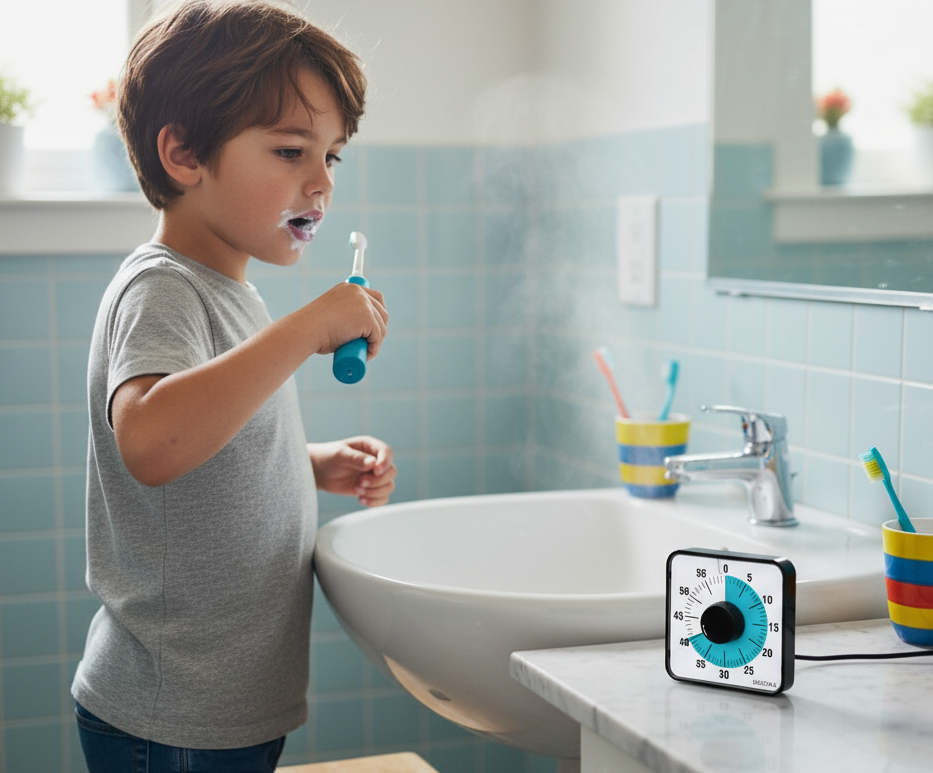
Another visual that works for us – a time timer. We use visual timers for everything… five minutes until we leave for school, one minute for brushing teeth, ten minutes for finishing a craft, and on and on. Time is abstract for ADHD brains, especially young ones. Timers make it concrete.
There are many visual timers available for purchase on Amazon (with coupons) that can be a great help in breaking down tasks into smaller, manageable steps for your child. You can often find ones that are highly-rated and budget-friendly.

Here’s what years of being a pediatric occupational therapist and mom of 3 has taught me:
External structures aren’t crutches—they’re necessary supports. My middle schooler doesn’t use a planner because she’s “bad at planning.” She uses it because her ADHD brain needs external scaffolding to do what neurotypical brains do automatically. There’s no shame in that. There’s only support and success.
What works evolves constantly. The strategies that worked last year might not work this year. The planner system we use now looks different than it did six months ago. I’m constantly adjusting, adapting, and trying new approaches. Changing the system as we need isn’t failure but rather it helps build success.
Regulation comes before everything else. I used to think the priority was getting homework done. Now I know the priority is getting my daughter regulated enough to do homework. It’s a subtle but crucial shift.
Specificity is kindness. Vague instructions set my kids up to fail. Specific, broken-down tasks set them up to succeed. “Clean your room” becomes “Put the books on the shelf.” “Do your homework” becomes “Finish the first five math problems.”
Buy-in matters more than perfection. The strategies that work best are the ones my kids help create. When my middle schooler chooses which activities to commit to and when we’ll fit in homework, she’s more invested in following through. When my first grader picks the song for cleanup time, she’s more engaged in the task.
If you’re new to supporting a child with ADHD, please hear this: you don’t have to have it all figured out right now. You don’t need a perfect system. You need to start somewhere and adjust as you go.
Maybe that’s a planner for your older child. Maybe it’s a visual schedule for your younger one. Maybe it’s just identifying one routine that’s falling apart and putting one support in place.
For us, tools like the Order Out of Chaos planner have been game-changers—not because they’re magic, but because they provide the external structure ADHD brains need to succeed. The visual layout, the time-blocking format, and the weekend planning space all align with how executive functioning actually works (or doesn’t work) for kids with ADHD.
But more than any specific tool or strategy, what’s made the biggest difference is shifting my mindset. These accommodations and supports aren’t signs of weakness or failure. They’re the difference between my kids struggling through each day and actually thriving.
And honestly? Watching my daughters learn to advocate for what they need, seeing them succeed because of, not in spite of, their ADHD management strategies, that’s what makes every Sunday planning session and every supported cleanup worth it.
If you work with kids with ADHD, here are some strategies that have made a real difference in our home:
ADHD parenting isn’t about finding the one perfect strategy. It’s about building a toolkit of approaches that work for your specific kids in your specific family. It’s messy, exhausting, and constantly evolving, AND it’s also deeply rewarding to watch your kids develop confidence. Not because their ADHD went away, but because they learned to work with their brains instead of against them.
And Sunday evenings? They’re still controlled chaos. But now, it’s chaos with a plan.