
Written by Brittni Winslow MS, OTR/L
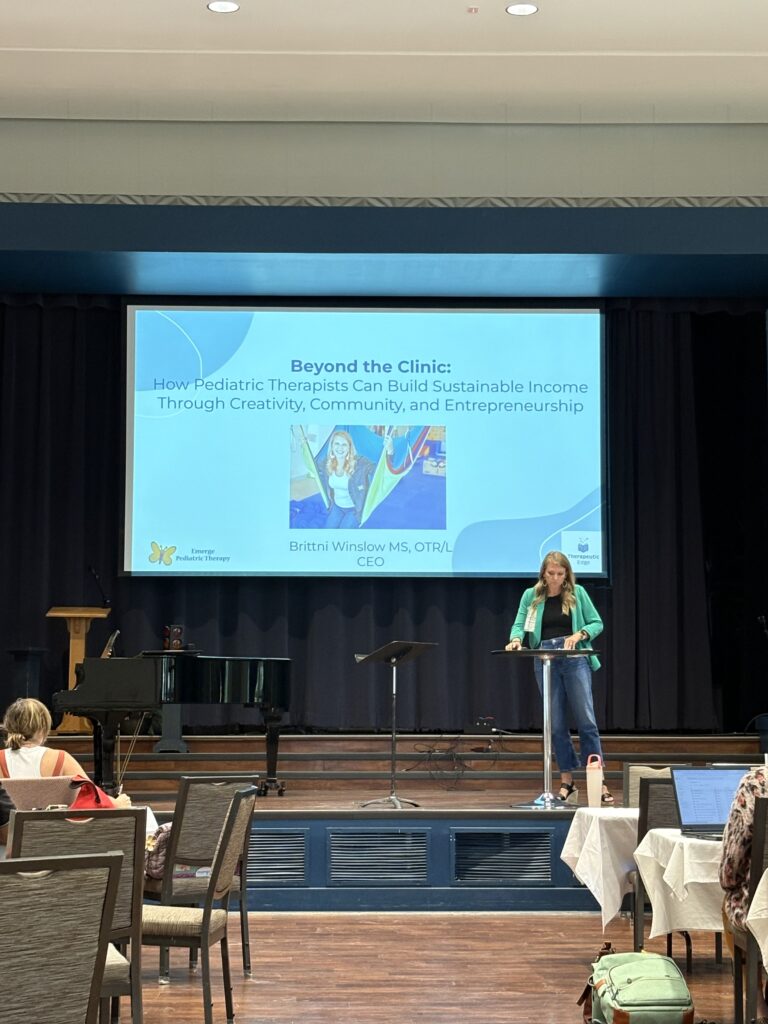
Last week, I had the privilege of speaking to a room full of pediatric occupational and speech therapists about something that’s been on my heart for years: the untapped potential we have to create income streams that align with our passion for helping families.
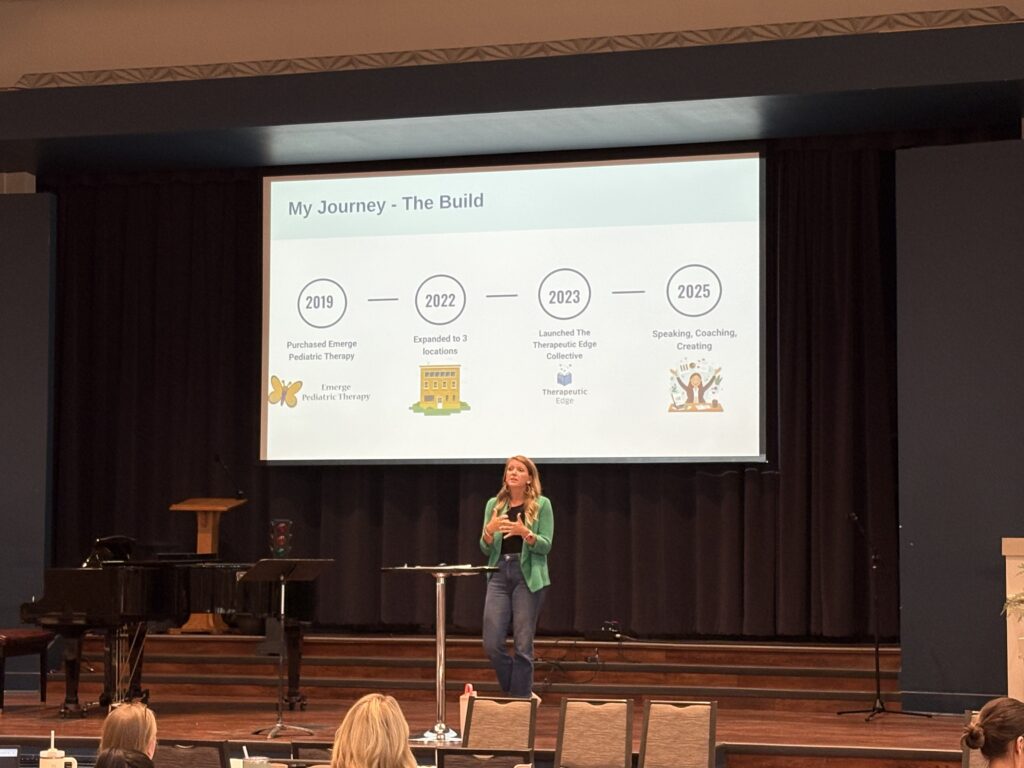
The response was immediate and overwhelming. Hands shot up when I asked who had ever thought, “I love my work but wish I had more financial freedom.” Heads nodded when I talked about the limitations of relying on insurance reimbursements and traditional employment models. And by the end of our 90 minutes together, I watched something beautiful happen – therapists started seeing themselves not just as clinicians, but as educators, creators, and entrepreneurs.
Here’s what I wish someone had told me much earlier: your expertise extends far beyond the therapy room, and the world needs what you know.
Think about it. How many times have you explained sensory processing to a confused parent? How often do teachers ask you about motor planning strategies? How frequently do other therapists come to you with questions about specific techniques or approaches?
These aren’t just casual conversations – they’re glimpses into the impact you could be making on a much larger scale.
But here’s where most of us get stuck: we think we need some magical additional qualification to share our knowledge more broadly. We tell ourselves we’re “just” a school-based therapist or “only” have five years of experience. We wait for the perfect time, the perfect credentials, or the perfect opportunity.
I’m here to tell you that perfect time doesn’t exist. What does exist is your unique combination of clinical training, personal experience, and communication style that can help people in ways that no one else can replicate.
During my presentation, I broke down four realistic income streams that therapists can explore without abandoning their clinical work:
Digital Products are where most of us should start. That visual schedule you created for one family? It could help hundreds of families. Those parent handouts you’ve refined over the years? They’re exactly what overwhelmed parents are searching for online. The barrier to entry is low, the impact potential is high, and you can start this weekend.
CEU Content Creation leverages something we already do – teach. Whether it’s a lunch-and-learn at a local clinic or an online course about your specialty area, other therapists are hungry for practical, evidence-based education from someone who’s actually doing the work.
Speaking and Consulting opportunities are everywhere once you start looking. Schools need sensory processing training. Businesses want workplace wellness programs. Parent groups are desperate for expert guidance. The key is positioning yourself as the solution to problems you solve every day.
Creative Collaborations with brands, apps, or platforms can provide both income and impact. But here’s my non-negotiable rule: only partner with products or services you genuinely use and believe in. Your reputation and integrity are worth more than any affiliate commission.
What struck me most during our session wasn’t the tactical questions about pricing or platforms – it was the mindset blocks that keep talented therapists playing small.
We’ve been conditioned to think that helping people should always be free, but here’s the truth: when you undervalue your expertise, you make it harder for people to take it seriously. When you give everything away for free, you can’t sustain the level of service that creates real transformation.
The therapists who are successfully creating additional income streams aren’t necessarily the most experienced or the most credentialed. They’re the ones who decided their knowledge has value and took imperfect action to share it.
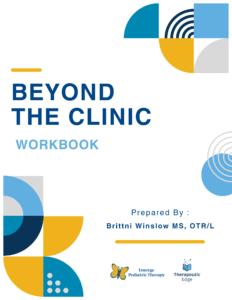
During our action planning session, I watched therapists identify their “superpowers” – those things they explain repeatedly, the problems they solve consistently, the approaches that get results. I provide a workbook for the therapists to use as they went through the workshop as a place to dream and jot down their ideas as we went.
The woman who specializes in picky eating? She could create a parent course that reaches thousands of families instead of just the ones on her caseload. The therapist who’s developed amazing visual supports? Those could be helping teachers across the country. The SLP who’s mastered telehealth? Other therapists are desperate to learn those skills.
Your first step isn’t creating a business plan or designing a logo. It’s identifying one problem you solve really well and creating a simple solution you can share with others. Maybe it’s a one-page guide. Maybe it’s a short video series. Maybe it’s a 30-minute webinar.
The goal isn’t perfection – it’s connection. It’s helping one person, then ten people, then a hundred people with the knowledge you’ve already developed.
Here’s what happened after my presentation that reminded me why this work matters: three therapists stayed after to tell me they were finally ready to start the projects they’d been thinking about for months. Two others exchanged information to become accountability partners. One practice owner was thinking about how she can generalize this to support her “brick and mortar” and get more of her team involved.
This isn’t just about extra income – though financial freedom is important and valid. It’s about amplifying your impact. It’s about reaching families who can’t access traditional therapy services. It’s about sharing your hard-earned wisdom with colleagues who are struggling with the same challenges you’ve already solved.
When you think beyond the clinic walls, you’re not abandoning your calling as a therapist. You’re expanding it.
If you’re reading this and feeling that familiar tug – that sense that you have more to offer than your current role allows – I would love to hear from you. If you are ready to explore what’s beyond the clinic for you, you can download my Beyond the Clinic workbook to start exploring what could be next!
Also, if you’d like to talk about ideas and strategies about business, practice, or life as an OT, PT, or SLP, I’m here to help. You can book a video call with me here.
Ready to explore what’s beyond the clinic for you? As much as I loved teaching therapists to Think beyond the clinic, I also would love to hear about the problems you solve and the impact you want to make!